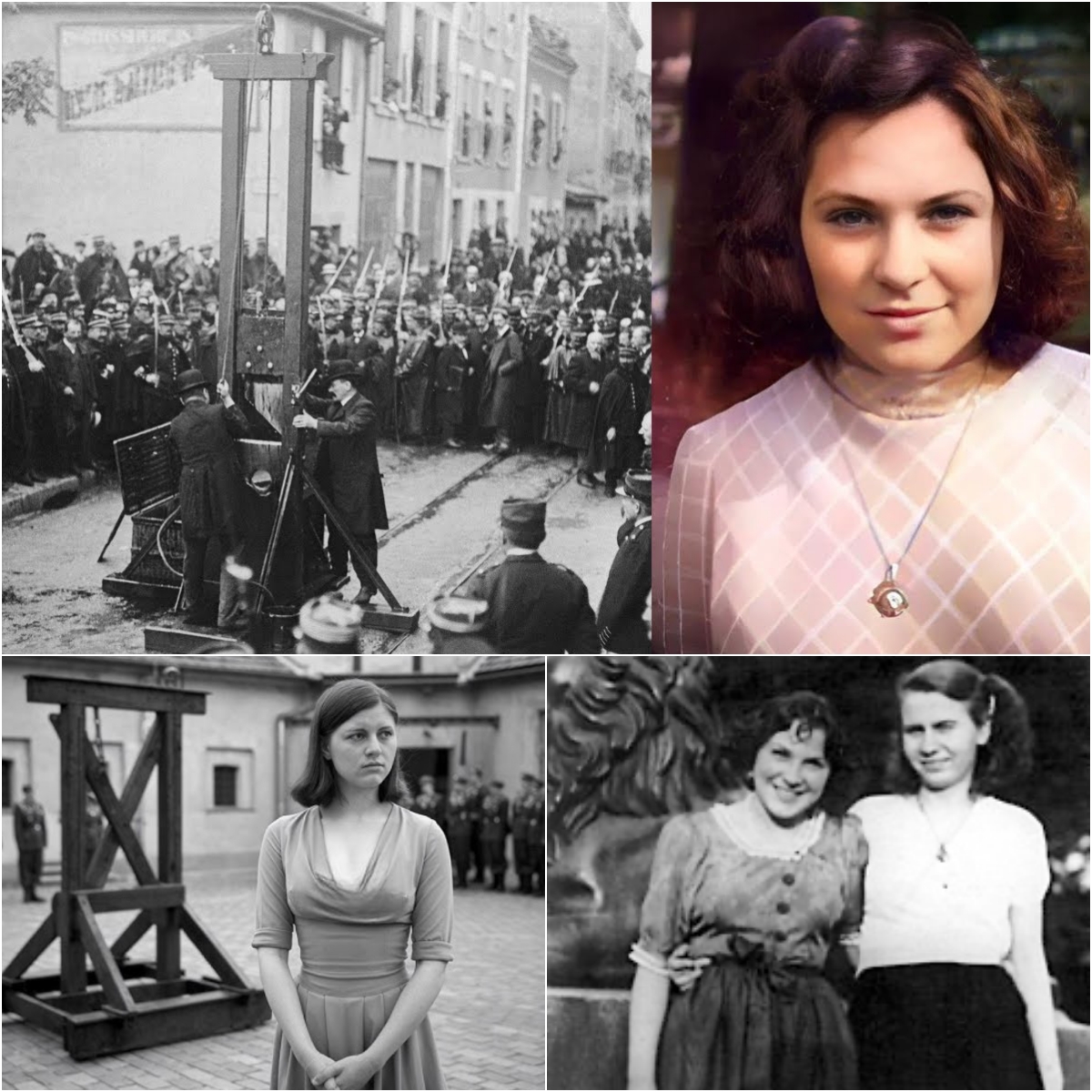
EXTREMELY SENSITIVE CONTENT – 18+ ONLY
(CONTENT WARNING: GRAPHIC DESCRIPTION OF EXECUTION BY GUILLOTINE)
This post refers to the judicial execution of a young German civilian woman during the final months of the Third Reich. Shared solely for historical education and remembrance of the victims of wartime injustice.
The Execution Of The Guillotined 19-Year-Old Female “Public Enemy”
Erna Wazinski (1925–1945)

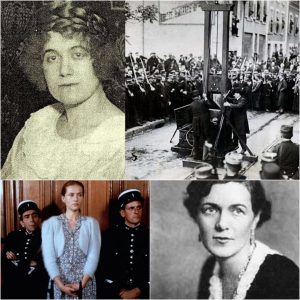
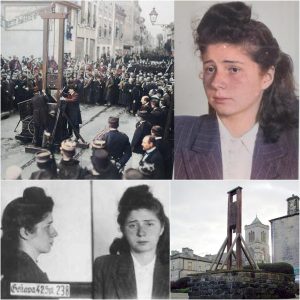
In the early hours of 26 March 1945, just six weeks before the total collapse of Nazi Germany, 19-year-old Erna Wazinski from Braunschweig became one of the youngest women ever executed on the German Fallbeil (guillotine).
On the night of 14–15 October 1944, Braunschweig suffered a devastating Allied air raid. Fires raged and hundreds of homes were destroyed. Like many desperate residents, Erna – a factory worker who had lost everything – entered damaged buildings to salvage food, clothing and blankets for her family. She was caught by a patrol and accused of “plundering during a state of emergency” (Plünderung unter Ausnutzung der Luftgefahr), a crime that carried an automatic death sentence under wartime decrees introduced after 1942.
Her trial before the People’s Court (Volksgerichtshof) in Braunschweig on 12 March 1945 lasted less than an hour. No defence witnesses were allowed, and the appointed lawyer merely pleaded for mercy. The judge, Roland Freisler’s successor Heinrich Detlev Schäfer, confirmed the death sentence the same day.
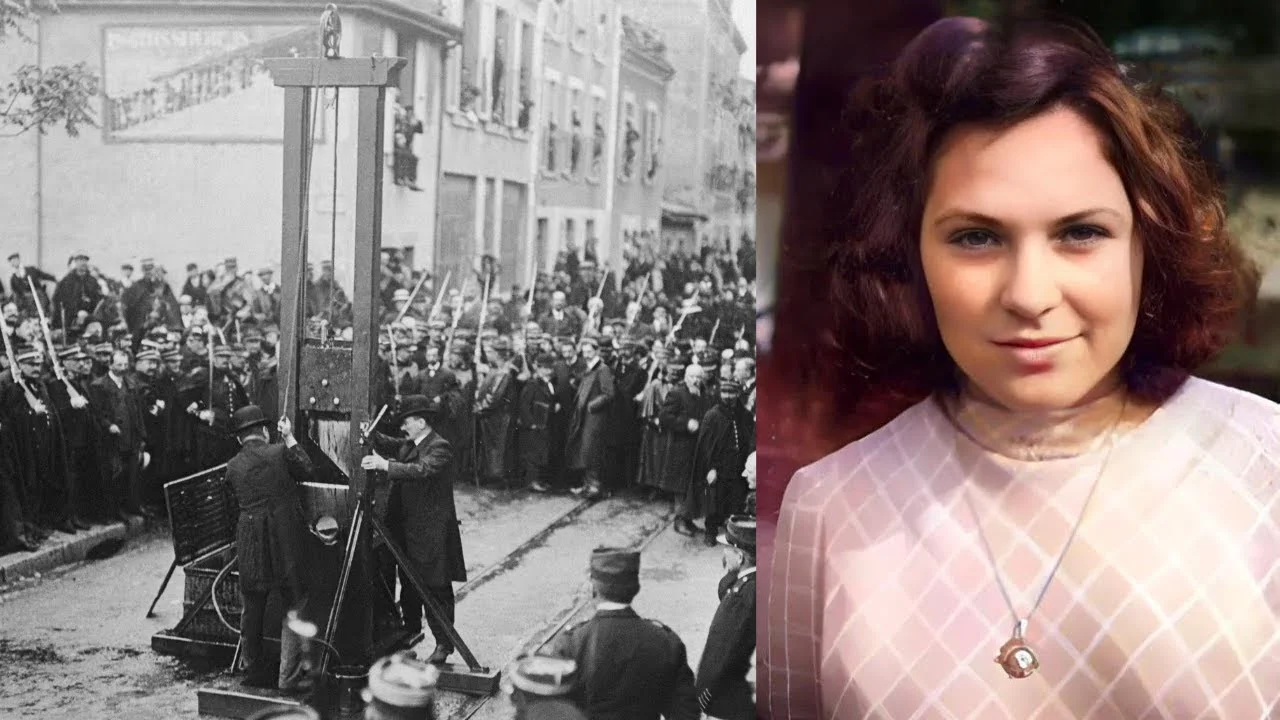
On 26 March 1945, at Wolfenbüttel Prison – one of the main execution sites in northern Germany – Erna was led to the guillotine room. Prison records note that she remained composed and asked only that her mother be informed she had “faced it bravely”. The blade fell at 06:17 a.m.
Between 1933 and 1945, approximately 16,000 people were executed on the Fallbeil inside Germany and annexed territories. In the chaotic final year of the war, many death sentences were issued for minor survival-related offences committed during air raids.
Erna Wazinski’s sentence was annulled posthumously in 1992 by a German court, which declared it a clear miscarriage of justice.
We remember Erna Wazinski today not to nurture hatred, but to honour the thousands of ordinary German civilians who, in the final desperate months of the war, were condemned by a collapsing regime for trying to survive; to recognise how fear and ideology can corrupt justice completely; and to stand guard so that never again will hunger and ruin be punished as high treason.
Official & reputable sources
Landesarchiv Niedersachsen – Wolfenbüttel, execution register 1945
Wachsmann, Nikolaus – Hitler’s Prisons: Legal Terror in Nazi Germany (Yale University Press, 2004)
Evans, Richard J. – The Third Reich at War (Penguin, 2008), chapter “The Home Front in Flames”
Justiz und NS-Verbrechen – Vol. XLV (Amsterdam University Press) – case summary
Gedenkstätte Wolfenbüttel Prison – permanent documentation on late-war executions